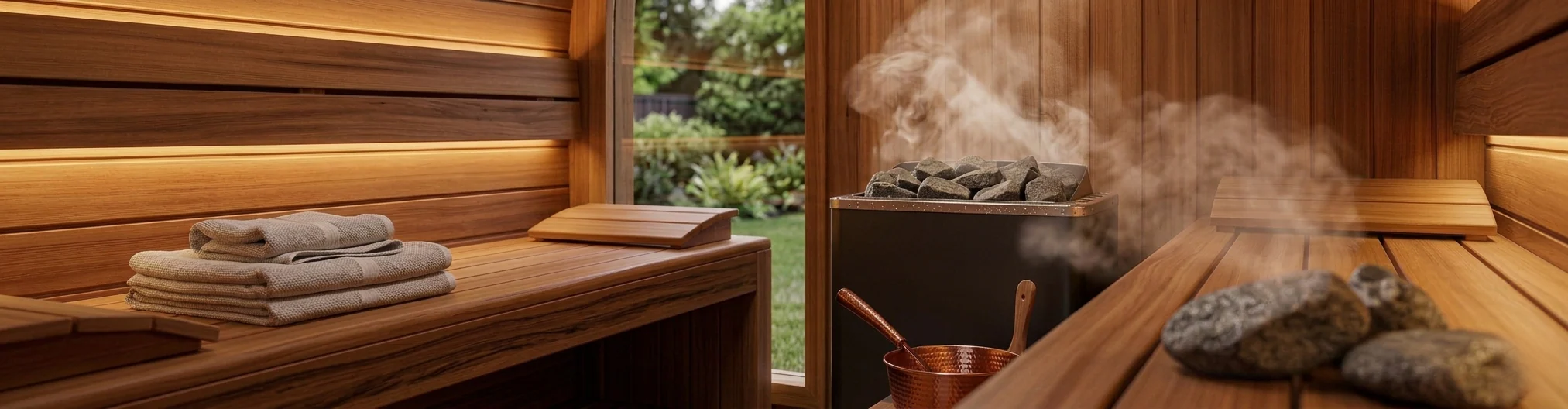

As heatwaves become more frequent and summer temperatures continue to climb, researchers are taking a closer look at an interesting question: can repeated exposure to heat help the human body become better at handling hot weather?
Sauna bathing is attracting particular attention because it provides a controlled form of heat exposure. While a sauna is not a substitute for hydration, shade, cooling, or other heatwave precautions, growing research into heat acclimation and passive heat exposure suggests that regularly exposing the body to heat may trigger adaptations that improve how it responds to subsequent heat.
The important distinction is timing. Using a sauna regularly before a period of extreme heat is very different from entering a sauna during an active heatwave.
Understanding that difference is essential.
What Is Heat Acclimation?
Heat acclimation describes the process through which the body gradually adapts to repeated exposure to hot conditions.
The human body has sophisticated systems for controlling its internal temperature. When environmental temperatures rise, the body increases blood flow to the skin and produces sweat. As sweat evaporates, it helps remove heat from the body.
Repeated heat exposure can make some of these responses occur more efficiently.
Research into heat training—particularly in sports and exercise physiology—has shown that repeated exposure to heat can lead to physiological adaptations associated with improved heat tolerance.
These adaptations can include:
-
Earlier onset of sweating
-
Increased sweating efficiency
-
Greater blood flow to the skin
-
Expansion of plasma volume
-
Reduced cardiovascular strain during subsequent heat exposure
-
Improved ability to regulate body temperature
These changes don't make someone immune to extreme heat. Instead, they may help the body respond more effectively when it encounters heat again.
Why Are Saunas Being Studied?
Athletes have used deliberate heat exposure as part of preparation for competitions in hot environments for years.
Heat training can take several forms, including exercising in hot conditions, spending controlled periods in a hot environment, or using passive heat exposure such as sauna bathing or hot-water immersion.
A sauna provides one potential way of creating a repeatable heat stimulus without exercising.
During a sauna session, the body responds to the elevated temperature by increasing skin blood flow and sweating. With repeated exposure, researchers are interested in whether those physiological responses can become more efficient.
This is one reason sauna bathing has become part of the conversation around heat acclimation.
However, sauna research and heatwave research are not the same thing. A controlled sauna environment is very different from spending several hours outdoors during a severe heatwave.
How Does the Body Adapt to Repeated Heat?
The body's response to heat is largely about moving and releasing excess heat.
When body temperature starts to rise, blood vessels near the skin expand. This increases blood flow toward the surface of the body, where heat can be transferred to the surrounding environment.
At the same time, the sweat glands become increasingly important.
Sweating allows the body to cool itself through evaporation. The more effectively this system operates, the better the body may be able to manage a given heat load.
Repeated heat exposure may also increase plasma volume—the liquid portion of blood. This can support circulation and help the cardiovascular system handle the demands associated with heat.
These adaptations are among the reasons researchers are investigating whether passive heat exposure, including sauna bathing, could contribute to heat acclimation.
Sauna Use and Heat Tolerance: What Does the Research Actually Suggest?
The evidence is promising enough to justify further research, but it is important not to overstate what scientists currently know.
Studies of heat acclimation have demonstrated that repeated heat exposure can produce measurable physiological changes. Much of the established research comes from exercise and sports physiology, where people deliberately prepare for competition in hot environments.
Researchers are now examining whether similar adaptations can be produced through passive heat exposure.
That includes questions such as:
Can regular sauna sessions improve heat tolerance?
How long does heat acclimation last?
Does passive heat exposure produce the same adaptations as exercising in the heat?
Who benefits most from heat training?
How should heat exposure be structured to remain safe?
These questions are particularly relevant as extreme heat becomes a growing public-health concern.
How Long Does Heat Acclimation Take?
Heat adaptation does not happen after a single sauna session.
Heat-training research generally involves repeated exposure over several days, with some protocols using approximately 40–60 minutes of heat exposure per day for four to six or more days.
The exact response depends on the person, the temperature, the duration of exposure, and the method used.
Another important point is that heat acclimation is not permanent.
Some adaptations can begin to fade when regular heat exposure stops. This means that heat training is better understood as a temporary physiological adaptation rather than a permanent change in the body's ability to tolerate heat.
Longer or repeated periods of heat exposure may produce adaptations that persist longer, but the duration varies.
Does Going to a Sauna During a Heatwave Help?
This is where the distinction becomes extremely important.
Preparing the body for hot weather and adding more heat during an actual heatwave are two different situations.
When temperatures are already extremely high, the body may be under significant thermal and cardiovascular stress.
Adding a sauna session on top of that heat load may not provide the same controlled stimulus used in a heat-acclimation program.
In fact, during a severe heatwave, the priorities are generally the opposite: reduce heat exposure, stay hydrated, keep cool, and avoid unnecessary physical exertion during the hottest periods.
A sauna should therefore not be viewed as an emergency heatwave treatment or a way to "train" your body while it is already struggling with extreme temperatures.
Heat Acclimation Is Not Heat Protection
One of the most important points to understand is that heat adaptation does not make a person protected from heat-related illness.
Even someone who regularly uses a sauna can still become dangerously overheated.
Heatwaves can involve temperatures that place substantial stress on the cardiovascular system, particularly when nighttime temperatures remain elevated and the body doesn't get enough opportunity to recover.
Regular sauna use may be studied as a form of controlled heat exposure, but it does not replace basic heat-safety measures.
During extreme weather, public-health recommendations such as staying hydrated, seeking cooler environments, limiting strenuous activity, and checking on people who are particularly vulnerable remain essential.
What Happens When You Are Already Dehydrated?
Hydration is another major consideration.
Sweating causes the body to lose water, and prolonged heat exposure can increase that loss.
If someone enters a sauna while already dehydrated from hot weather, exercise, alcohol consumption, illness, or inadequate fluid intake, the additional heat exposure can increase the strain on the body.
This is one reason sauna use during an extreme heat event requires considerably more caution than a controlled sauna routine during cooler weather.
Feeling thirsty, unusually tired, dizzy, weak, confused, or unwell should not be treated as something to simply push through.
Who Should Be Especially Careful With Heat Exposure?
Heat affects people differently.
The ability to regulate body temperature can be influenced by age, fitness, hydration, medications, cardiovascular health, illness, and other individual factors.
People with certain medical conditions or cardiovascular problems may need to avoid or modify sauna and hot-bath exposure.
Heat exposure can be particularly inappropriate during an acute illness or fever, and people with certain heart or blood-pressure conditions should seek medical guidance before deliberately adding significant heat stress.
If you have a medical condition, take medications that affect blood pressure or fluid balance, or have been advised to limit heat exposure, it's sensible to speak with a healthcare professional before starting a heat-training routine.
Why Athletes Use Heat Training
The idea of deliberately exposing the body to heat isn't new.
Athletes sometimes use heat acclimation before competing in hot climates because the body can adapt to repeated thermal stress.
The goal isn't simply to "get used to being hot." The objective is to produce physiological adaptations that can help the body manage heat during subsequent exercise.
These may include changes in sweating, skin blood flow, plasma volume, and cardiovascular responses.
Researchers are interested in whether some of these principles can also be applied through passive heat exposure, including sauna bathing.
That makes the sauna an interesting research subject—not because it eliminates the risks of extreme heat, but because it provides a controlled environment in which the body experiences thermal stress.
Sauna Before Summer vs. Sauna During Extreme Heat
The simplest way to understand the difference is to think about preparation versus exposure.
Before a Heatwave
A structured heat-acclimation program may involve repeated, controlled heat exposure over several days.
For some people, sauna bathing may be one method researchers investigate as passive heat exposure.
During a Heatwave
The objective changes completely.
Instead of deliberately increasing heat stress, the priority should be reducing the body's heat load.
That means seeking air-conditioned or cooler environments, drinking appropriate fluids, limiting strenuous activity, avoiding prolonged exposure to direct sunlight, and paying attention to signs of heat-related illness.
A sauna is therefore not a replacement for heatwave safety measures.
The Difference Between Heat Training and Heat Treatment
It is easy to see how the two ideas could become confused.
Heat training is planned, controlled exposure designed to encourage physiological adaptation.
Heat treatment would imply using heat to address an existing medical problem.
Sauna bathing should not be presented as a treatment for heat exhaustion, heatstroke, dehydration, or other heat-related illnesses.
If someone develops serious symptoms from heat exposure, the appropriate response is to stop the exposure, move to a cooler environment, and seek appropriate medical assistance.
Could Saunas Become Part of Future Heat-Adaptation Research?
As global temperatures rise, heat adaptation is likely to remain an important area of research.
Researchers are increasingly interested in practical ways people might prepare for hot environments, particularly athletes, outdoor workers, and people who regularly travel between different climates.
Passive heat exposure is attractive because it can potentially provide a controlled thermal stimulus without requiring exercise.
Saunas and hot-water immersion are therefore likely to continue appearing in studies investigating heat acclimation, cardiovascular responses to heat, sweating, thermoregulation, and heat tolerance.
But more research is needed to determine exactly how sauna-based heat exposure should be structured, who benefits most, and how closely the adaptations from sauna bathing resemble those produced by active heat training.
The Bottom Line
Regular sauna use is being studied for more than relaxation.
Repeated exposure to heat can produce physiological adaptations, and researchers are investigating whether sauna bathing and other forms of passive heat exposure can help people develop some degree of heat acclimation.
The potential connection is interesting: repeated heat exposure may encourage earlier sweating, increased skin blood flow, expanded plasma volume, and other changes involved in temperature regulation.
But there is an important limitation.
Being heat-acclimated does not mean being protected from a heatwave.
A sauna session during extreme weather is not a substitute for cooling, hydration, rest, and avoiding excessive heat exposure. In fact, adding more heat when the body is already dealing with extreme temperatures can increase thermal strain.
For now, the most sensible way to think about sauna-based heat exposure is as an area of ongoing research and a potential preparation strategy, rather than a solution for extreme heat itself.
As heatwaves become a more regular part of summer, understanding how the human body adapts to heat—and how that adaptation can be achieved safely—could become increasingly important.