
What Is the Best Type of Sauna for Health? Traditional vs. Infrared, Recovery After Running, and How to Build a Home Sauna
If you are thinking about adding a sauna to your home, one question usually comes first:
What is the best type of sauna for your health?
Then come the other questions.
Should you choose a traditional Finnish sauna or an infrared sauna? Is a higher temperature always better? Is sauna good after running or strength training? How long should you stay inside? And perhaps the biggest practical question of all: how hard is it to build a sauna at home?
The answer is not as simple as choosing one sauna and calling it the "healthiest."
Traditional and infrared saunas create heat differently. They feel different, require different installation considerations, and may suit different people and different goals.
For someone who loves running, cycling, lifting, hiking, or other forms of exercise, a sauna can also become something more than a wellness product. It can become part of a weekly recovery ritual — a quiet transition between physical effort and rest.
And that may be one of the biggest advantages of owning a sauna at home.
You don't have to travel to a spa or wellness center. The sauna can be waiting for you after a workout, at the end of a long day, or whenever you need a few minutes away from everything else.
So let's look at the different types of saunas, what makes them different, how sauna fits into an active lifestyle, and what you should know before building or buying one.
Traditional vs. Infrared Sauna: What Is the Difference?
The two main types of home sauna are traditional saunas and infrared saunas.
Both expose the body to heat, but they deliver that heat differently.
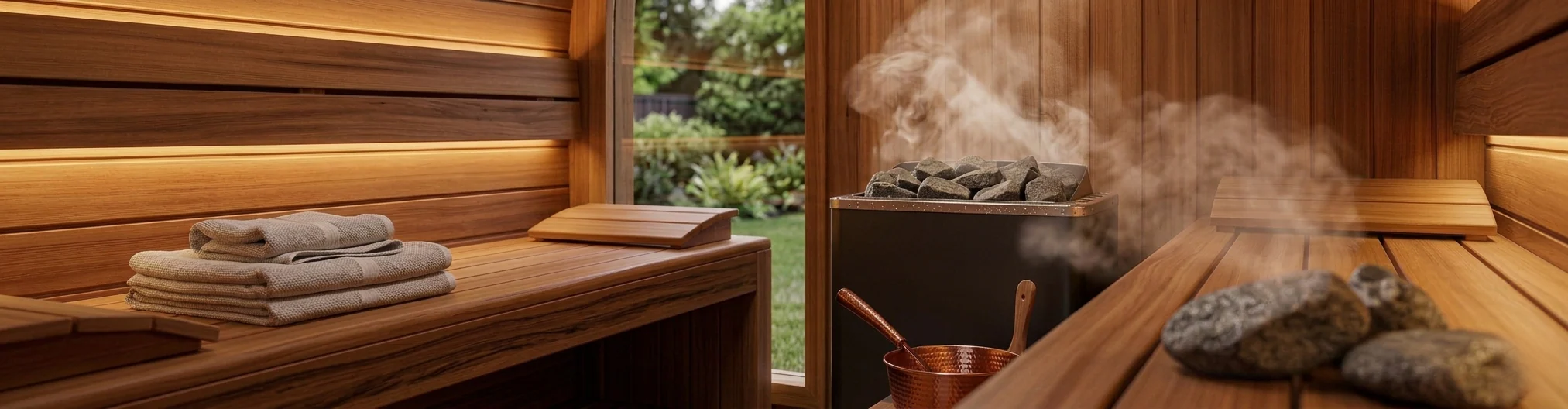
A traditional sauna heats the air inside the room. An electric sauna heater warms sauna stones, which then transfer heat throughout the room. Water can be poured over the stones to create steam and temporarily increase humidity.
An infrared sauna uses infrared emitters to provide radiant heat directly toward the body. Because of this difference, infrared saunas generally operate at lower room temperatures than traditional saunas.
Neither experience is automatically right for everyone.
The better question is:
Which type of heat do you enjoy, and what do you want your sauna to become part of?
What Is a Traditional Finnish Sauna?
A traditional sauna is the classic sauna experience.
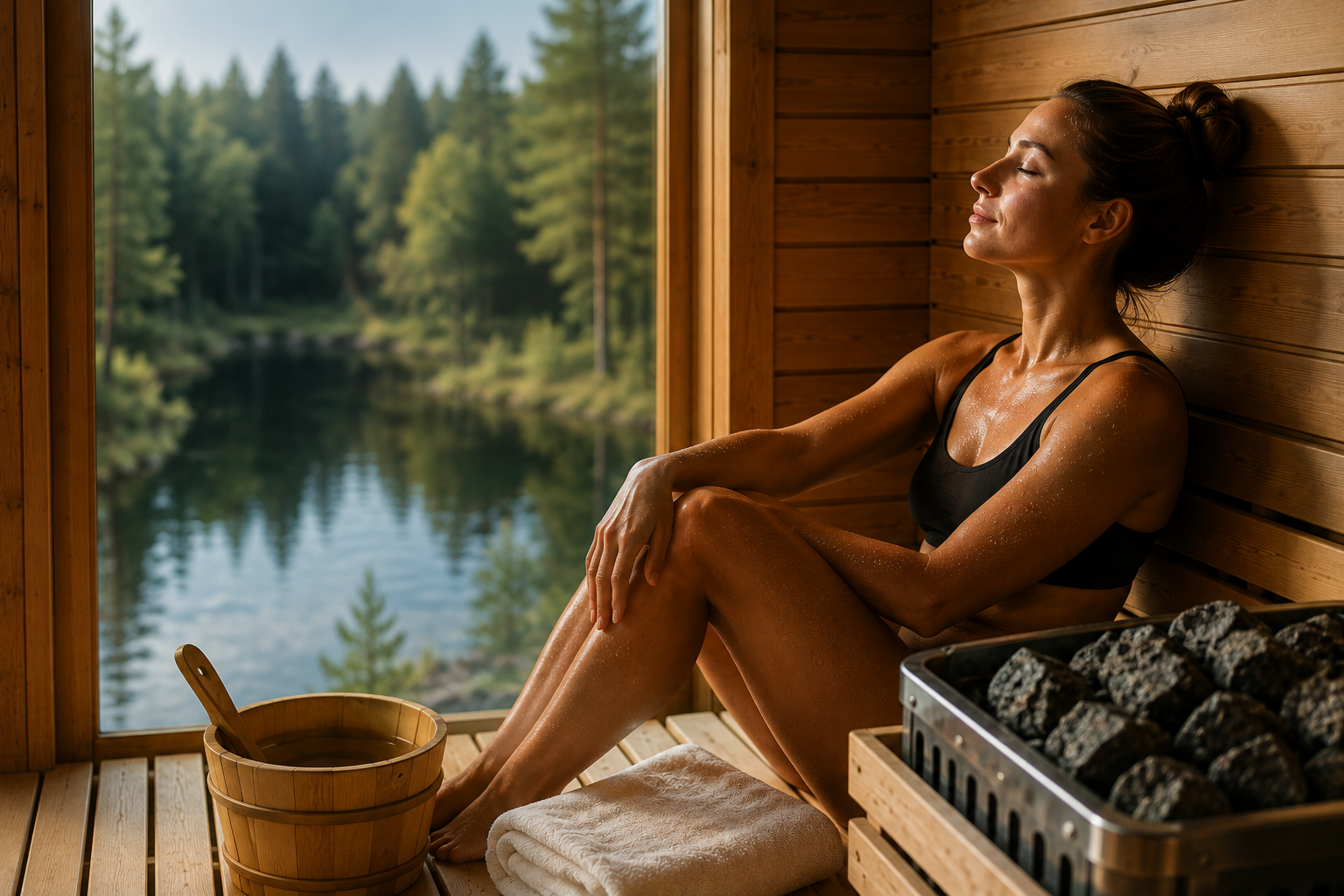
It is usually a wood-lined room with benches, a dedicated sauna heater, and heated stones. The temperature can become very high, while the air remains relatively dry unless water is added to the stones.
Traditional sauna temperatures are commonly around 150°F to 200°F, depending on the sauna, heater, user's preference, and operating conditions.
One of the unique features is the ability to control the experience yourself.
Want dry heat?
Simply enjoy the heated room.
Want more humidity?
Pour a small amount of water over the hot stones.
That sudden wave of steam is one of the defining experiences of traditional sauna bathing.
Traditional saunas can also be built in different sizes, from compact one- or two-person spaces to larger rooms designed for families and social sauna sessions.
They can be installed indoors or outdoors when the sauna and installation are designed for that environment.
For someone who wants the traditional Finnish experience, this is difficult to replace.
What Is an Infrared Sauna?
Infrared saunas provide a different kind of experience.
Instead of heating the entire room to extremely high temperatures, infrared emitters provide radiant heat while the sauna typically operates at a lower ambient temperature.
Many infrared saunas operate somewhere around 120°F to 150°F, depending on the model.
This lower-temperature environment is one of the main reasons people choose infrared.
You still experience heat and sweating, but the room does not need to become as hot as a traditional sauna.
For some people, that makes it easier to relax.
Infrared saunas are also commonly designed for indoor residential use and are often available in compact one- and two-person configurations.
That makes them particularly appealing for:
-
Home gyms
-
Bedrooms
-
Wellness rooms
-
Apartments and smaller homes
-
Private recovery spaces
-
People who prefer lower temperatures
The experience is simply different from traditional sauna bathing.
There are no hot sauna stones and no traditional löyly experience created by pouring water over a heater.
Instead, the focus is on radiant heat in a quieter, lower-temperature environment.
Which Sauna Is Better for Health?
This is where sauna discussions often become misleading.
You will find claims that one sauna is always healthier than another, but the evidence does not justify such a simple answer.
Traditional Finnish sauna bathing has a particularly strong history of research, including long-term observational research connecting frequent sauna use with cardiovascular and other health outcomes.
Infrared sauna research also exists, particularly around areas such as relaxation, pain, circulation, and certain aspects of heat therapy, but the long-term evidence is not as extensive as the large Finnish sauna studies.
That distinction matters.
It would be inaccurate to say that infrared sauna and traditional sauna have identical research behind them.
It would also be inaccurate to say that infrared is automatically unhealthy simply because it operates at a lower temperature.
The practical answer is much simpler:
The best sauna is the one that fits your goals and that you will actually use consistently.
A sauna that is used several times a week can become a meaningful part of your lifestyle.
A sauna that you bought because someone said it was "the healthiest" but never use is a very different story.
Traditional Sauna for Cardiovascular and Long-Term Wellness
Traditional sauna bathing creates a substantial heat stimulus.
As your body heats up, your heart rate rises and blood vessels dilate. Your body works to regulate its temperature, producing a physiological response that is different from simply sitting in a warm room.
This is one reason traditional Finnish sauna bathing has received so much attention in health and longevity research.
Long-term Finnish studies have found associations between more frequent sauna use and lower risks of certain cardiovascular and neurological outcomes.
These findings are interesting, but they should be understood correctly.
They show an association between sauna habits and health outcomes; they do not mean that sauna alone prevents disease or replaces exercise, nutrition, sleep, or medical care.
Still, the research makes traditional sauna a particularly interesting option for people who want the strongest connection to the traditional sauna research literature.
Infrared Sauna for a Gentler Heat Experience
Infrared sauna has a different advantage.
You don't need to tolerate the same room temperature as a traditional sauna.
For someone who finds 180°F uncomfortable, an infrared sauna may be much easier to incorporate into a regular routine.
That can be important because consistency matters.
A person who enjoys a comfortable infrared session several times a week may get more value from that sauna than someone who owns a traditional sauna but avoids using it because the heat feels too intense.
Infrared can be especially attractive for people who want:
-
A lower-temperature experience
-
A private environment
-
Relaxation
-
A convenient home wellness routine
-
Post-workout relaxation
-
Frequent sessions
The goal doesn't have to be pushing yourself to your heat limit.
Sometimes the goal is simply to sit down, slow your breathing, and allow the body to transition out of a busy day.
Sauna After Running: Why the Combination Makes Sense
There is a reason running and sauna have become such a natural combination for active people.
You finish your run.
Your heart is still beating quickly. Your body is warm. Your breathing is gradually slowing.
Then you transition into a quiet sauna.
The pace changes.
The workout is over, and instead of immediately moving on to the next task, you give yourself a few minutes to slow down.
This is one of the most appealing ways to use a home sauna.
Sauna after running isn't about trying to make the workout harder.
It is about creating a deliberate transition from movement to recovery.
Heat exposure can increase circulation and relax muscles, while the quiet environment gives you an opportunity to slow down mentally as well.
The recovery process isn't only about your muscles.
Your nervous system also needs to transition from effort to rest.
After a hard run, your body has been in an active state. A calm sauna session can become a signal that the training session is finished and it is time to relax.
When Should You Use a Sauna After Running?
Timing matters.
You don't necessarily want to finish an intense run and immediately jump into the hottest sauna you can find.
Your heart rate and breathing are already elevated, and you may have lost a significant amount of fluid through sweating.
A better approach is to allow your body to settle first.
For many people, 15 to 30 minutes after finishing a run can provide enough time to cool down, slow the heart rate, drink some water, and transition into the sauna.
The exact timing depends on the workout and the individual.
A short easy run in cool weather is very different from a long race in hot weather.
Listen to your body.
How Long Should You Stay in the Sauna After Running?
After running, there is no reason to turn your sauna session into an endurance competition.
A shorter session can be enough.
For someone new to sauna use, around 8 to 15 minutes can be a reasonable starting point, followed by a cooling period.
More experienced sauna users may prefer longer sessions, but the important thing is how you feel.
You don't need to stay until you are exhausted.
The purpose is recovery and relaxation.
If you feel dizzy, nauseous, unusually weak, confused, or unwell, leave the sauna and cool down.
Hydration Is Especially Important After Running
This part is easy to overlook.
Running causes fluid loss.
Sauna causes additional sweating.
Combining the two means you need to pay attention to hydration.
Drink fluids after your run and before sauna use, particularly after longer or harder workouts.
For longer runs or sessions with substantial sweating, electrolytes may also be useful depending on your individual needs.
The sauna should never be used as a way to intentionally dehydrate yourself.
If you are already dehydrated from exercise, adding more heat is not a smart recovery strategy.
What About Cold After the Sauna?
Heat and cold have been connected to sauna culture for generations.
After spending time in the heat, stepping outside into cool air or taking a cool shower can feel incredibly refreshing.
Some people enjoy a stronger contrast with cold water.
Others simply sit somewhere cool and allow their body temperature to come down naturally.
There is no requirement to take an extreme cold plunge.
The important part is giving your body time to cool down and returning to a comfortable state.
The heat-to-cold contrast can also make the sauna experience feel like a complete ritual:
Run → Cool down → Sauna → Cool down → Hydrate → Relax
For many active people, that routine is as valuable for the mind as it is for the body.
Sauna Is Not Only About Muscles
When people talk about recovery, they often focus entirely on muscle soreness.
But recovery is bigger than that.
Your nervous system, sleep, stress levels, hydration, nutrition, and mental state all contribute to how you feel after training.
A sauna can create a space where you have no reason to rush.
No phone.
No notifications.
No work.
No running.
Just heat, quiet, breathing, and time.
That may sound simple, but it is increasingly difficult to find in everyday life.
For some people, this mental pause becomes one of the biggest reasons they continue using their sauna.
Sauna After Strength Training
The same idea applies after weight training.
After a hard lifting session, your muscles have been under significant mechanical stress.
You don't need to punish them further.
Instead, sauna can be used as a relaxing part of the post-workout routine.
Some people prefer infrared because of its lower-temperature environment. Others prefer traditional sauna because they enjoy the stronger heat.
Again, there is no universal winner.
Your preference matters.
How Hard Is It to Build a Sauna?
Now we come to the practical side.
A home sauna can be surprisingly simple to install — or surprisingly complicated to build.
It depends on what you mean by "build."
Installing a pre-built sauna is one thing.
Constructing a complete sauna room from scratch is another.
Building a Traditional Sauna From Scratch
A traditional sauna room is essentially a small specialized building system.
You need to consider:
-
Room dimensions
-
Framing
-
Insulation
-
Vapor protection
-
Interior wood
-
Benches
-
Sauna door
-
Heater
-
Sauna stones
-
Electrical installation
-
Ventilation
-
Lighting
-
Flooring
-
Heater clearances
-
Air circulation
The heater must also be correctly sized for the sauna.
A heater that is too small may struggle to heat the room properly.
A heater that is too large may not be appropriate for the room or installation.
This is why building a traditional sauna is more involved than simply creating a hot wooden room.
Why Insulation Matters
A sauna needs to hold heat efficiently.
Proper insulation helps prevent heat from escaping through the walls and ceiling and allows the heater to maintain a more consistent environment.
The ceiling deserves particular attention because hot air naturally rises.
A poorly insulated sauna can take longer to heat and require more energy to maintain the desired temperature.
Good construction isn't just about appearance.
It affects how the sauna performs.
Why Ventilation Matters
Traditional sauna rooms also need appropriate ventilation.
Fresh air needs to enter the space, while stale air needs a route out.
Ventilation contributes to comfort, air quality, and the overall sauna experience.
It is one of those details that may not be exciting when planning a sauna, but it becomes extremely important once you start using the room.
Ventilation requirements vary according to the sauna design, heater, room configuration, and local requirements, so the manufacturer's installation instructions should always be followed.
What About Electrical Work?
This is another area where DIY enthusiasm should have limits.
Traditional sauna heaters can require substantial electrical power.
Some installations require dedicated circuits and professional electrical work.
The same principle applies to other electrical components in the sauna.
Before purchasing a heater, understand its electrical requirements and make sure your home can support them.
If electrical work is required, use a qualified electrician and follow applicable local codes.
Saving money on installation is not worth creating an unsafe sauna.
Is an Infrared Sauna Easier to Install?
In many cases, yes.
Pre-built infrared saunas are generally designed around modular panels that are assembled into a finished unit.
The heating system is integrated into the sauna design, reducing much of the construction work involved in building a traditional sauna room.
That can make infrared attractive to homeowners who want the convenience of a home sauna without taking on a major construction project.
You still need to follow the manufacturer's installation instructions and electrical requirements.
But compared with building a traditional sauna from scratch, the process is usually much more straightforward.
Pre-Built Sauna vs. DIY Sauna
If you are deciding between building and buying, ask yourself how much of the project you actually want to manage.
Build from scratch if you:
-
Want a custom room
-
Have construction experience
-
Want specific dimensions
-
Want a permanent traditional sauna
-
Enjoy managing renovation projects
-
Have the space and time for the project
Choose a pre-built sauna if you:
-
Want a faster installation
-
Don't want to manage a complete construction project
-
Want a predictable finished design
-
Have limited space
-
Want a simpler indoor installation
-
Prefer convenience
Neither option is automatically better.
It comes down to how much customization you want versus how much work you want to take on.
Indoor vs. Outdoor Sauna
Another major decision is where the sauna will live.
Indoor Sauna
An indoor sauna can be incredibly convenient.
You can place it near:
-
A home gym
-
A bathroom
-
A bedroom
-
A wellness room
-
A basement
-
A dedicated fitness area
You don't need to walk outside in winter or rain.
For people who want frequent sauna sessions, that convenience can make a huge difference.
Outdoor Sauna
Outdoor saunas create a completely different experience.
For many people, stepping outside after a sauna session is part of the enjoyment.
An outdoor traditional sauna can become the centerpiece of a backyard wellness area.
It can sit near a pool, hot tub, cold plunge, garden, or outdoor gym.
It also allows homeowners to create a dedicated sauna space without sacrificing valuable indoor floor area.
Outdoor installation does require additional planning, including the foundation, weather protection, electrical supply, drainage, and local requirements.
Which Sauna Is Best for Runners?
There isn't one answer.
A runner who loves high heat may prefer a traditional sauna.
A runner who wants a gentler recovery session may prefer infrared.
A runner with an outdoor training area may love an outdoor traditional sauna.
The best choice depends on the experience you want after training.
If your ideal routine is:
Run → cool down → traditional sauna → cool air → shower → dinner
then traditional may be your perfect fit.
If your ideal routine is:
Run → hydrate → shower → infrared sauna → relax → sleep
then infrared may make more sense.
The important thing is that the sauna fits naturally into your lifestyle.
What Is the Best Sauna for Relaxation?
This comes down almost entirely to personal preference.
Some people find the intense heat of a traditional sauna incredibly calming.
Others prefer the quieter, lower-temperature environment of infrared.
Traditional sauna provides more control over heat and humidity.
Infrared provides a lower-temperature experience without the need for a traditional heater and stones.
Try both if you have the opportunity.
The sauna you look forward to using is probably the better sauna for you.
What Is the Best Sauna for a Home Gym?
Both can work.
An infrared sauna can be convenient when space is limited and you want a compact wellness feature inside your home gym.
A traditional sauna can make a larger home gym or dedicated wellness area feel much more like a complete recovery space.
If several people will use it together, traditional sauna designs generally offer more flexibility in room size.
If you primarily want private sessions, infrared can be an excellent fit.
What About Steam Saunas?
Steam rooms are often grouped together with saunas, but they provide a different experience.
Traditional saunas generally rely on dry heat, with optional bursts of humidity from water poured over hot sauna stones.
A steam room maintains very high humidity.
The difference is significant.
If you enjoy humid heat and the feeling of steam, a steam room may be appealing.
If you want the classic Finnish sauna experience, a traditional sauna is the better choice.
If you prefer lower temperatures and radiant heat, infrared may be more appropriate.
How Often Should You Use a Sauna?
There is no magic number that everyone needs to follow.
Some experienced sauna users enjoy several sessions each week.
Others use their sauna once or twice a week.
Your routine should take into account:
-
Your overall health
-
Your training schedule
-
Your heat tolerance
-
Session intensity
-
Hydration
-
Sleep
-
Weather
-
How your body responds
You don't need to use the sauna every day to enjoy it.
Consistency is more important than forcing yourself into an aggressive schedule.
What Should You Look for When Buying a Sauna?
A sauna is a long-term purchase, so look beyond the photographs.
1. Construction Quality
Look at the materials, joinery, interior finish, doors, benches, and overall construction.
2. Wood
Sauna interiors need wood that performs well in heated environments.
Different woods have different appearances, characteristics, and price points.
3. Heater
For traditional saunas, heater quality and correct sizing are critical.
Make sure the heater is appropriate for the room volume.
4. Electrical Requirements
Understand exactly what the sauna requires before purchasing it.
A beautiful sauna is not useful if your home's electrical system cannot support it without additional work.
5. Ventilation
Traditional sauna rooms need appropriate ventilation.
Make sure the planned installation allows for proper airflow.
6. Size
Don't automatically buy the smallest sauna that fits your available space.
Consider whether you want to sit, lie down, or use it with another person.
7. Indoor or Outdoor Rating
If you want an outdoor sauna, make sure the model is specifically designed for outdoor use.
8. Warranty and Support
A sauna is a long-term investment.
Manufacturer support and warranty coverage can matter just as much as the initial purchase price.
One-Person, Two-Person, or Larger Sauna?
Size should reflect how you plan to use the sauna.
A one-person sauna can be excellent for private sessions.
A two-person sauna provides more room and allows you to share the experience.
Larger traditional saunas can accommodate families and groups and provide more flexibility for stretching out or lying down.
Before choosing a size, ask:
Will I use this alone?
Will my partner use it with me?
Do I want to lie down?
Will friends or family use it?
How much space can I realistically dedicate to the sauna?
The right size is not necessarily the biggest one.
It is the size that makes you comfortable enough to use the sauna regularly.
Can Sauna Help With Recovery?
Sauna can be a useful part of a recovery routine, but it should be viewed as one piece of the puzzle.
Recovery also depends on:
-
Sleep
-
Hydration
-
Nutrition
-
Training load
-
Rest days
-
Mobility
-
Stress management
Heat may help you relax and can increase circulation, but it doesn't replace these fundamentals.
For athletes, the best approach is to think of sauna as an addition to good recovery habits, rather than a shortcut around them.
The Sauna After Running Ritual
There is something satisfying about ending a run in a sauna.
You start outside.
You move.
You breathe.
Your heart works harder.
You finish.
Then everything slows down.
You drink water.
You let your breathing settle.
You enter the sauna.
The heat surrounds you.
Your muscles relax.
Your mind becomes quieter.
Then you step outside again.
Cool air.
Fresh water.
A shower.
Food.
Rest.
That simple sequence can turn sauna into more than a piece of equipment.
It becomes a ritual.
And rituals are often easier to maintain than complicated recovery programs.
Safety Comes First
Sauna should feel challenging but controlled.
Do not treat it as a competition.
If you are dehydrated, sick, dizzy, or feeling unusually weak, skip the sauna or stop the session.
People with certain medical conditions, cardiovascular problems, blood-pressure concerns, pregnancy, or medications that affect heat tolerance should speak with a qualified healthcare professional before beginning regular sauna use.
And after a demanding run, especially in hot weather, take extra care with hydration and cooling.
The goal is to leave the sauna feeling relaxed and refreshed — not exhausted.
So, What Is the Best Type of Sauna for Health?
After looking at the different options, the answer becomes much clearer.
Traditional Finnish Sauna
Best suited to people who want:
-
High-temperature heat
-
The classic sauna experience
-
Optional steam
-
Sauna stones
-
Strong heat exposure
-
Indoor or outdoor possibilities
-
Larger social sauna spaces
-
The type of sauna most closely represented in long-term Finnish sauna research
Infrared Sauna
Best suited to people who want:
-
Lower temperatures
-
A gentler heat experience
-
Convenient indoor installation
-
Private sessions
-
A compact home sauna
-
Frequent relaxation and wellness sessions
Outdoor Traditional Sauna
Best suited to people who want:
-
A backyard wellness space
-
A traditional sauna experience
-
Indoor-outdoor contrast
-
A larger sauna environment
-
A dedicated recovery area
Sauna for Runners
Both traditional and infrared can work.
Traditional sauna provides the stronger high-heat experience.
Infrared provides a lower-temperature alternative.
The best option is the one that works with your training schedule and that you actually enjoy using.
The Bottom Line
There is no single sauna that is perfect for every person.
Traditional Finnish saunas have the deepest history and strongest long-term research around sauna bathing, particularly regarding cardiovascular and broader health associations.
Infrared saunas offer a lower-temperature alternative that many people find comfortable and convenient for home use.
For runners and other active people, either type can become part of a thoughtful recovery routine.
The important thing is not to chase the highest temperature or longest session.
It is to build a routine you can maintain.
Run.
Cool down.
Hydrate.
Relax.
Enjoy the heat.
Cool down again.
Then get on with your day.
That is where a home sauna can become more than a luxury.
It can become a space for recovery, relaxation, and a healthier rhythm at home.
The best sauna isn't necessarily the hottest sauna or the most expensive sauna.
It's the sauna that fits your life — and the one you will actually use.
Frequently Asked Questions
Is a traditional sauna better than an infrared sauna?
Traditional Finnish sauna bathing has more extensive long-term research behind it, particularly regarding cardiovascular and other health associations. Infrared operates at lower temperatures and may be preferable for people who want a gentler heat experience. The right choice depends on your goals and preferences.
Is sauna good after running?
Sauna can be incorporated into a recovery routine after running. Allow your body to cool down and your heart rate and breathing to settle first, rehydrate appropriately, and keep the sauna session comfortable rather than treating it as another intense workout.
How long should I wait before using a sauna after running?
A short cooldown period is sensible. Around 15–30 minutes may work well for many people, but the appropriate timing depends on the intensity of the run, weather, hydration, and how you feel.
How long should you stay in a sauna after a workout?
There is no universal duration. If you're new to sauna use, start with a shorter session and increase gradually as you become accustomed to the heat. After a demanding workout, there is rarely a reason to push yourself to your limit.
Can I use an infrared sauna after running?
Yes. Infrared can be a convenient option for people who prefer a lower-temperature sauna experience after exercise.
Is sauna good for muscle recovery?
Sauna can promote relaxation and increase circulation, making it a potentially useful addition to a broader recovery routine. It should complement proper training, nutrition, hydration, and sleep.
Is it hard to build a sauna at home?
A pre-built sauna is generally much easier to install than a sauna room constructed from scratch. A custom traditional sauna requires careful planning around insulation, ventilation, electrical work, heater sizing, materials, and safety.
Can I build an outdoor sauna?
Yes, traditional sauna designs can be built for outdoor use. Outdoor installations require additional consideration for the foundation, weather protection, electrical supply, drainage, and local building requirements.
Which sauna is best for runners?
There is no universal winner. Traditional sauna is a good choice for runners who enjoy high heat and want the classic sauna experience, while infrared may suit runners who prefer lower temperatures and convenient frequent sessions.
Does sauna help with weight loss?
Sauna causes sweating and temporary fluid loss, which can make your scale weight decrease temporarily. This is not the same as losing body fat. Sauna should not replace exercise or a balanced nutrition plan for weight management.
Is a one-person sauna enough?
For individual use, yes. A one-person sauna can be an excellent choice if space is limited. If you want to use the sauna with a partner, a two-person model may provide a better experience.
What is the healthiest sauna?
There is no scientifically established single "healthiest sauna" for every person. Traditional Finnish sauna bathing has particularly strong long-term research, while infrared provides a lower-temperature alternative that many people find comfortable and convenient. The best choice depends on your health goals, preferences, available space, and how consistently you will use it.