
Thinking about adding an infrared sauna to your wellness routine? You’re not alone.
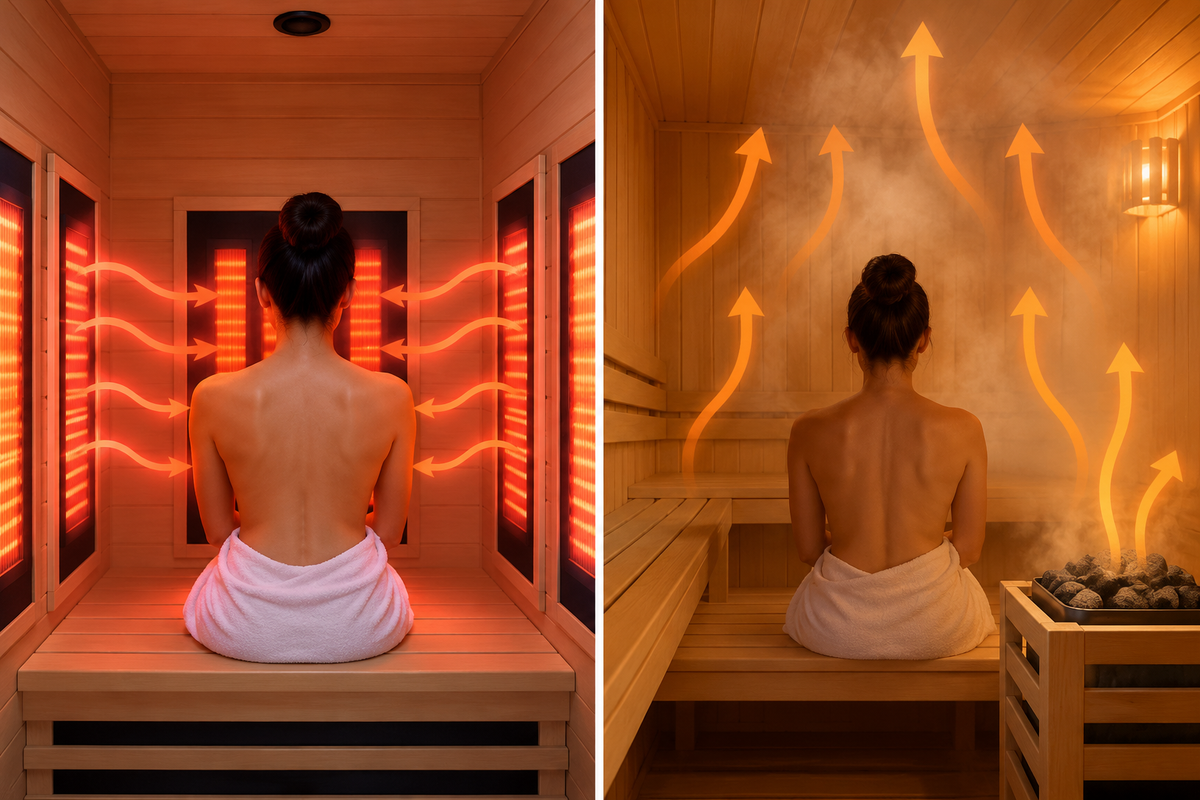
Infrared saunas have become increasingly popular in homes, gyms, spas, and wellness centers across the United States. Unlike traditional saunas, infrared saunas use infrared light to warm your body more directly, allowing them to operate at lower temperatures while still making you sweat.
But what does an infrared sauna actually do for your health?
Research suggests that sauna use may support relaxation, circulation, cardiovascular health, muscle recovery, and pain management. However, it’s important to separate well-supported benefits from marketing claims. Research specifically on infrared saunas is still developing, and some of the strongest long-term research has been conducted on traditional sauna bathing rather than infrared saunas specifically.
In this guide, we'll look at the potential health benefits of infrared saunas, how they work, what the research says, how to use one safely, and what you should realistically expect from regular sauna sessions.
What Is an Infrared Sauna?
An infrared sauna is a type of sauna that uses infrared energy to produce heat.
Traditional saunas primarily heat the air around you, which then warms your body. Infrared saunas work differently: infrared heaters emit infrared energy that warms the body more directly.
Because of this difference, infrared saunas generally operate at lower temperatures than traditional Finnish-style saunas. Cleveland Clinic notes that infrared saunas commonly operate around 110°F to 135°F, while traditional saunas can reach approximately 150°F to 195°F.
For many people, this lower-temperature environment makes infrared sauna sessions feel more comfortable and easier to tolerate.
The result is still a familiar physiological response to heat: your body warms up, blood vessels expand, heart rate increases, and you begin to sweat.
8 Potential Health Benefits of Infrared Saunas
1. May Support Heart and Circulatory Health
One of the most interesting areas of sauna research is cardiovascular health.
When your body is exposed to heat, your blood vessels dilate and blood flow increases. Your heart rate also rises as your body works to regulate its temperature.
These responses can resemble some of the cardiovascular effects of moderate physical activity, although a sauna session is not a replacement for exercise.
Research on regular sauna bathing has found associations between frequent sauna use and better cardiovascular outcomes. One large prospective study followed 2,315 middle-aged men in Finland and found that more frequent sauna bathing was associated with lower risks of sudden cardiac death and fatal cardiovascular disease. Importantly, this was an observational study involving traditional Finnish sauna use, so the findings cannot automatically be attributed to infrared saunas.
What this means
Regular heat exposure may be one part of a broader healthy lifestyle that supports cardiovascular wellness. But your sauna should complement — not replace — regular exercise, nutritious food, adequate sleep, and medical care.
2. May Help You Relax and Manage Everyday Stress
For many people, one of the biggest benefits of an infrared sauna is simply the opportunity to slow down.
Life can be busy. Work, family, screens, traffic, and constant notifications can make it difficult to spend even 20 minutes doing absolutely nothing.
An infrared sauna gives you a reason to disconnect.
The warmth can help relax your muscles, while taking quiet time away from daily distractions may support a feeling of calm and relaxation. Cleveland Clinic lists stress reduction and relaxation among the potential benefits associated with sauna use.
And sometimes, that simple routine matters.
You don't have to think of your sauna session as a complicated health treatment. It can simply be 20–30 minutes to breathe, relax, listen to music, or sit quietly.
3. May Help Soothe Sore Muscles After Exercise
If you've ever stepped into a warm shower after a hard workout and immediately felt your muscles relax, you already understand one of the basic effects of heat therapy.
Heat increases blood flow and can help relax tense muscles.
Infrared sauna sessions are therefore popular among people who exercise regularly, including runners, cyclists, weightlifters, and recreational athletes.
Cleveland Clinic notes that sauna heat may increase blood flow to muscles and help soothe sore muscles and muscle spasms.
A sauna can be particularly appealing after a workout because it combines warmth with a period of rest.
A simple post-workout routine
You might:
-
Finish your workout.
-
Rehydrate.
-
Take a shower.
-
Rest for a few minutes.
-
Spend a comfortable amount of time in the sauna.
-
Rehydrate again afterward.
The goal isn't to push yourself until you're exhausted. More heat is not necessarily better.
4. May Help With Temporary Muscle and Joint Discomfort
Heat therapy has long been used to help people feel more comfortable when muscles and joints are stiff or sore.
Research has also investigated infrared sauna therapy for chronic pain. Mayo Clinic notes that infrared sauna studies have examined conditions including arthritis, headaches and other chronic health problems, although larger and more precise studies are still needed.
This distinction is important.
An infrared sauna shouldn't be marketed as a cure for arthritis, chronic pain, or other medical conditions.
Instead, think of it as a wellness and relaxation tool that may help some people feel more comfortable.
If you have persistent or severe pain, it's always better to discuss the underlying cause with a healthcare professional.
5. May Support Better Sleep Through Relaxation
A relaxing evening routine can make a big difference in how you feel when it's time for bed.
Because sauna sessions can promote relaxation and reduce muscle tension, some people find that using a sauna as part of their nighttime routine helps them wind down.
The relationship between sauna use and sleep is an area of ongoing research, and the evidence isn't strong enough to say that an infrared sauna will treat insomnia.
But the basic idea makes sense:
Warmth → relaxation → less tension → a calmer transition into bedtime.
For some people, that's enough to make a sauna a valuable part of their evening routine.
6. May Promote Healthy Circulation
Heat naturally causes your blood vessels to widen, increasing blood flow near the skin and throughout the body.
That's one reason you become warm and flushed during a sauna session.
Improved circulation is also one of the physiological responses researchers have observed during sauna bathing. Sauna use increases heart rate and cardiac output while producing significant changes in blood flow.
This doesn't mean an infrared sauna “cleans your blood” or removes every toxin from your body.
Your body already has sophisticated systems — particularly the liver and kidneys — that process and eliminate waste.
The more accurate claim is that sauna heat temporarily changes circulation and increases sweating as your body works to regulate temperature.
7. May Help You Build a Consistent Wellness Routine
This benefit doesn't always show up in scientific studies, but it may be one of the most practical.
Healthy habits work best when they're habits you actually enjoy.
If you enjoy using your infrared sauna, you may be more likely to create a consistent wellness routine around it.
For example:
Monday: workout + sauna
Wednesday: sauna + stretching
Friday: workout + sauna
Sunday: relaxing sauna session
The sauna itself isn't a magic solution. But it can become part of a bigger lifestyle that includes exercise, recovery, sleep, hydration, and stress management.
8. May Provide Benefits Without the Extreme Heat of a Traditional Sauna
This isn't necessarily a health benefit by itself, but it is one of the main reasons people choose infrared saunas.
Traditional saunas can become extremely hot. Infrared saunas generally operate at lower temperatures while still producing a strong feeling of warmth and sweating.
For people who don't enjoy very high temperatures, an infrared sauna can feel more approachable.
That can make it easier to establish a regular routine.
Infrared Sauna vs. Traditional Sauna: What's the Difference?
The biggest difference is how the heat is produced.
| Feature | Infrared Sauna | Traditional Sauna |
|---|---|---|
| Main heat source | Infrared heaters | Heated air and sauna stones |
| Typical temperature | Lower | Higher |
| How your body is heated | Infrared energy warms the body | Hot air warms the body |
| Sweat | Yes | Yes |
| Relaxation | Yes | Yes |
| Cardiovascular response | Yes | Yes |
| Research | Growing | More extensive |
| Experience | Gentler, radiant warmth | Hotter surrounding air |
It's important not to assume that infrared saunas automatically provide every benefit associated with traditional Finnish sauna research.
Mayo Clinic specifically points out that some studies involving sauna-related health conditions were performed using traditional saunas rather than infrared saunas, and that more research is needed to establish the benefits of infrared sauna therapy.
Do Infrared Saunas Detox Your Body?
This is one of the biggest questions people ask.
The short answer is: be careful with the word “detox.”
Sweating is one of the body's natural responses to heat, but your liver and kidneys are the primary organs responsible for processing and eliminating many waste products.
There isn't strong scientific evidence that an infrared sauna can “flush toxins” from the body in the way some advertisements suggest.
That doesn't mean sweating is useless.
Sweating helps regulate body temperature, and the relaxation and circulation effects of heat exposure can be meaningful.
The strongest approach is to focus on what the science actually supports rather than promising a dramatic detox.
Can an Infrared Sauna Help You Lose Weight?
Another common question is whether infrared sauna use can help with weight loss.
You may see the scale drop immediately after a long sauna session because you've lost water through sweating.
But water loss is not the same thing as losing body fat.
Once you drink fluids and rehydrate, much of that weight will return.
If your goal is sustainable fat loss, the fundamentals still matter most:
-
Regular physical activity
-
A balanced diet
-
Appropriate calorie intake
-
Adequate protein
-
Quality sleep
-
Consistency over time
An infrared sauna can be part of a healthy lifestyle, but it shouldn't be presented as a replacement for exercise or nutrition.
How Long Should You Stay in an Infrared Sauna?
There is no single perfect sauna duration for everyone.
If you're new to infrared saunas, start conservatively and see how your body responds.
A practical starting point for many healthy adults is around 10–15 minutes, gradually increasing the duration if you tolerate it comfortably.
Always follow the instructions provided by your sauna manufacturer.
During your session, pay attention to how you feel.
If you become dizzy, nauseated, unusually weak, or uncomfortable, leave the sauna and cool down.
Hydration is particularly important because sauna sessions cause fluid loss through sweating. Cleveland Clinic specifically warns about dehydration and recommends leaving the sauna if you become dizzy or nauseated.
How Often Should You Use an Infrared Sauna?
There isn't a universally established “perfect” schedule for infrared sauna use.
Some people enjoy sauna sessions several times per week, while others use one whenever they need time to relax or recover.
Consistency and comfort are more important than trying to maximize the number of sessions.
A good approach is to start with a few sessions per week and adjust based on how your body responds.
And remember: you don't need to feel exhausted for a sauna session to be worthwhile.
Are Infrared Saunas Safe?
For many healthy adults, sauna use can be a reasonable wellness activity when practiced responsibly.
However, sauna heat isn't appropriate for everyone.
You should speak with your healthcare professional before using an infrared sauna if you have a medical condition, take medications that affect blood pressure or hydration, or have concerns about how heat exposure may affect you.
Extra caution is important during pregnancy. Cleveland Clinic advises against sauna use during pregnancy because elevated body temperature can pose risks, particularly during early pregnancy.
You should also avoid sauna use when you're sick, dehydrated, or feeling unwell.
Stop your session if you experience:
-
Dizziness
-
Nausea
-
Weakness
-
Feeling faint
-
Difficulty breathing
-
Unusual or severe discomfort
An infrared sauna should feel relaxing — not like a test of endurance.
How to Get the Most From Your Infrared Sauna
You don't need to make your sauna routine complicated.
Before your session
Drink water and avoid entering the sauna already dehydrated.
During your session
Sit comfortably, relax, and allow your body to adjust to the heat.
You can read, meditate, listen to music, or simply enjoy a few minutes without your phone.
After your session
Cool down gradually and replace the fluids you lost through sweating.
Most importantly, listen to your body.
A shorter, comfortable session is better than staying too long simply because you think “more sweat means more benefits.”
The Bottom Line: Are Infrared Saunas Good for You?
For many healthy adults, an infrared sauna can be a relaxing and enjoyable addition to a wellness routine.
The potential benefits include:
✓ Relaxation and stress relief
✓ Increased circulation during heat exposure
✓ Soothing sore muscles
✓ Potential support for cardiovascular health
✓ Temporary relief from muscle and joint discomfort
✓ A relaxing environment that may support a healthy bedtime routine
✓ A comfortable alternative to higher-temperature traditional saunas
At the same time, it's important to keep expectations realistic.
Research on sauna bathing is promising, particularly for cardiovascular and general wellness outcomes, but research specifically on infrared saunas is still limited compared with the broader sauna literature. Mayo Clinic recommends more and better-controlled research before many of the proposed therapeutic benefits can be considered proven.
Think of an infrared sauna as one piece of the puzzle — not a miracle treatment.
The foundation of good health is still the same: move your body, eat well, sleep enough, manage stress, stay hydrated, and work with your healthcare professional when you have medical concerns.
An infrared sauna can simply give you another way to slow down, warm up, recover, and make time for yourself.
Frequently Asked Questions About Infrared Sauna Benefits
What are the main benefits of an infrared sauna?
Potential benefits include relaxation, increased circulation during heat exposure, soothing sore muscles, and temporary relief from some types of discomfort. Research into cardiovascular and other therapeutic applications is promising but still developing.
Is an infrared sauna better than a traditional sauna?
Not necessarily. They provide heat in different ways. Infrared saunas generally operate at lower temperatures and directly warm the body, while traditional saunas heat the surrounding air. Traditional sauna bathing currently has a larger body of long-term research.
How long should you sit in an infrared sauna?
Start with a shorter session and increase gradually if you tolerate it well. Always follow the manufacturer's instructions and leave immediately if you feel dizzy, nauseated, faint, or unwell.
Can infrared saunas burn belly fat?
No. Sweating causes temporary water loss, but that shouldn't be confused with meaningful body-fat loss. Sustainable fat loss comes primarily from nutrition, physical activity, and long-term lifestyle habits.
Do infrared saunas really detox your body?
There isn't strong evidence supporting the broad “detox” claims often used in sauna marketing. Your liver and kidneys play the major roles in processing and eliminating waste. Sauna use does increase sweating and can provide other potential wellness benefits.
Can I use an infrared sauna every day?
Some people use saunas frequently, but there isn't a universally established daily schedule that is right for everyone. Your tolerance, hydration, health status, and the sauna manufacturer's recommendations should guide your routine.
Can an infrared sauna help with sore muscles?
Heat can increase circulation and relax muscles, and sauna use may help soothe post-exercise soreness.
Is an infrared sauna safe?
Sauna use is generally considered safe for many healthy adults when used responsibly. However, people with certain medical conditions, those who are pregnant, or anyone taking medications that may affect heat tolerance or hydration should speak with a healthcare professional before using one.
A Simple Infrared Sauna Routine
If you're new to infrared sauna therapy, keep it simple:
1. Hydrate
Drink water before your session.
2. Start short
Begin with a comfortable session rather than trying to maximize your time.
3. Relax
Let the sauna be a break from your day.
4. Listen to your body
If you feel dizzy, nauseated, or unwell, get out.
5. Rehydrate afterward
Replace fluids lost through sweating.
6. Make it part of a bigger routine
Combine sauna use with exercise, healthy nutrition, good sleep, and recovery.
Final Thoughts
There's a reason infrared saunas have become such a popular part of modern wellness.
They're simple. They're comfortable. And for many people, they create something that's increasingly difficult to find in everyday life: time to slow down.
The science behind sauna bathing continues to grow, particularly around cardiovascular health and the body's response to heat. At the same time, the evidence for many specific infrared-sauna claims remains limited, so the most trustworthy approach is to focus on realistic benefits rather than miracle promises.
If you enjoy the warmth, the quiet, and the feeling of stepping out refreshed, an infrared sauna can be a valuable addition to your wellness routine.
Warm up. Slow down. Take a breath. Make time for yourself.