
Wellness is no longer a trend—it has become a lifestyle shift that is reshaping how people design and use their homes. Today, homeowners are thinking beyond aesthetics and functionality. They want spaces that actively improve health, reduce stress, and support long-term wellbeing.
This shift has brought a new focus on home wellness features, especially saunas. From outdoor barrel saunas to indoor spa-like installations, more people are choosing to transform their homes into personal wellness retreats.
Instead of relying on external gyms or spas, the modern homeowner wants convenience, privacy, and daily access to recovery and relaxation.
The Rise of Wellness-Focused Home Design
In recent years, interior and exterior design has started to revolve around one key idea: wellness living.
This means homes are no longer just places to live—they are becoming environments that actively support mental clarity, physical recovery, and emotional balance.
Homeowners are now investing in:
- Home gyms
- Cold plunge systems
- Meditation spaces
- Outdoor relaxation zones
- And most importantly, home saunas
The goal is simple: to reduce dependency on external wellness services and create a complete health-focused environment at home.
Saunas, in particular, have become one of the most desirable additions because they combine relaxation, detoxification, and recovery in a single experience.
Why People Are Replacing Gym Sauna Memberships with Home Saunas
For many people, gym memberships are no longer about fitness alone—they are often maintained just for sauna access. However, this comes with limitations.
Travel time, crowded facilities, scheduling issues, and lack of privacy often reduce the overall experience. As a result, homeowners are now reconsidering the value of paying monthly fees for limited access.
Installing a sauna at home eliminates these issues entirely.
With a home sauna, you can:
- Use it anytime without restrictions
- Avoid travel and waiting times
- Enjoy complete privacy
- Control your environment and comfort
- Integrate wellness into your daily routine
This convenience is one of the biggest reasons the home sauna market is growing rapidly.
Outdoor Barrel Saunas: A Perfect Blend of Design and Function
One of the most popular choices in modern wellness design is the outdoor barrel sauna.
These saunas are not only functional but also visually appealing. Their curved structure is designed to distribute heat efficiently while also adding a natural, rustic aesthetic to outdoor spaces.
They are typically made from high-quality woods such as cedar, which is known for its durability, resistance to moisture, and natural aroma.
Key benefits of barrel saunas include:
- Compact design suitable for small or medium backyards
- Efficient heat circulation due to rounded shape
- Natural wood construction for a traditional sauna feel
- Quick heating compared to some indoor setups
- Ability to fit 1–4 people depending on the model
Many homeowners appreciate that these saunas do not require large dedicated indoor space, making them ideal for suburban homes or even smaller properties.
The Authentic Traditional Sauna Experience
While infrared saunas are popular in modern wellness culture, many people still prefer the traditional sauna experience.
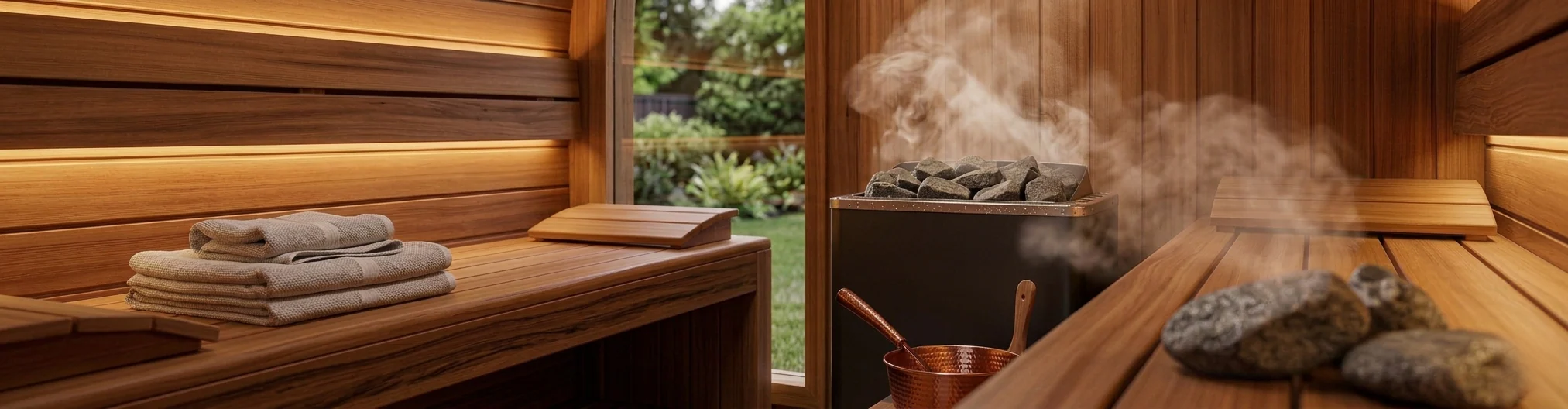
Traditional saunas use heated stones to generate intense dry heat. Water can be poured over the stones to create steam, increasing humidity and delivering a deeper, more immersive heat experience.
This process creates the signature “löyly” effect, where steam intensifies the warmth and enhances relaxation.
Common features of traditional saunas include:
- Stone-based heating systems
- Wooden interiors, often cedar or spruce
- Warm ambient lighting
- Ventilation systems for airflow control
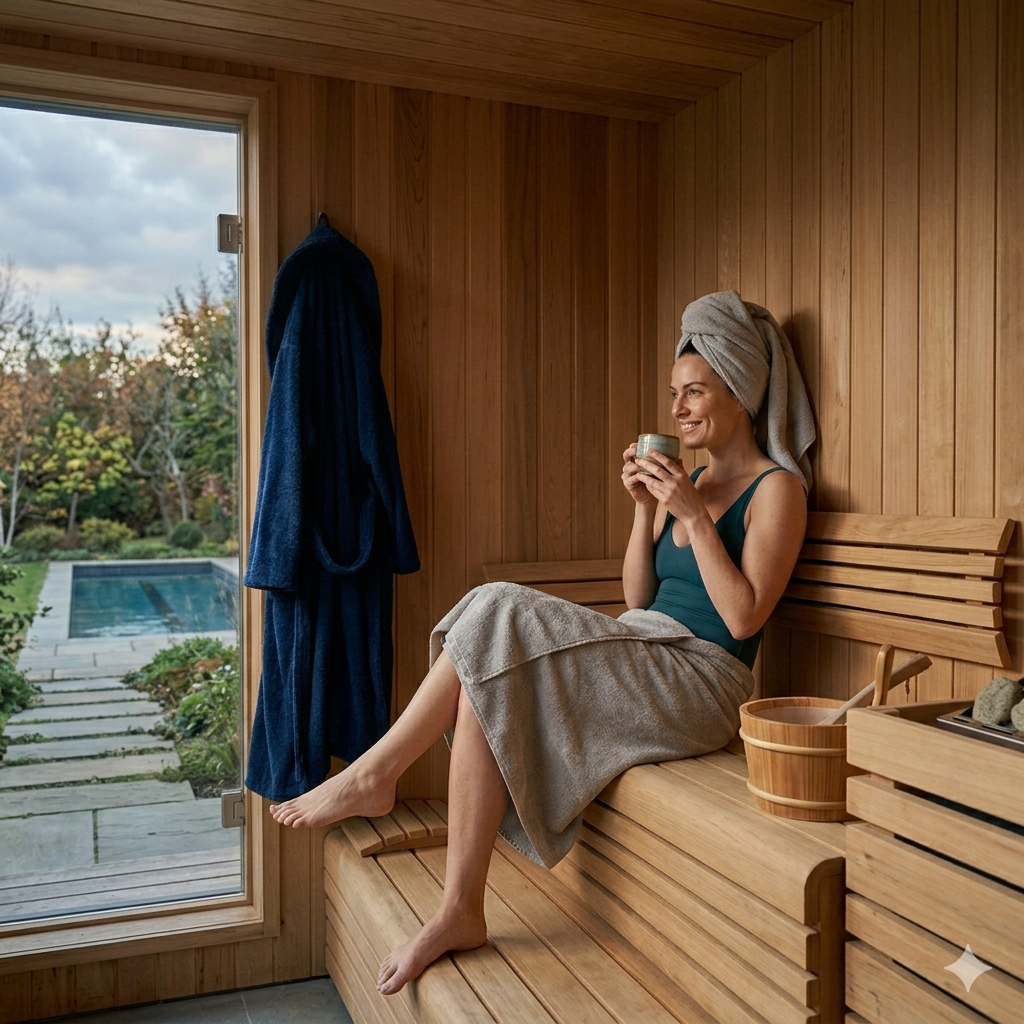
- Glass doors or windows for outdoor views
The combination of heat, steam, and natural materials creates a deeply calming environment that supports both physical and mental recovery.
Health and Wellness Benefits of Sauna Use
The popularity of saunas is strongly linked to their wide range of wellness benefits. Regular sauna use has been associated with both physical and mental improvements.
Physical benefits:
- Muscle recovery after exercise
- Improved blood circulation
- Temporary relief from joint stiffness
- Support for detoxification through sweating
- Enhanced cardiovascular stimulation
Mental and emotional benefits:
- Stress reduction
- Improved sleep quality
- Mental relaxation and clarity
- Reduced anxiety symptoms in some users
- A sense of daily ritual and mindfulness
Because of these benefits, saunas are increasingly being seen not as luxury items, but as essential wellness tools.
From Spa Culture to Home Wellness Lifestyle
Traditionally, sauna experiences were associated with spas, gyms, or wellness resorts. However, this is rapidly changing.
Modern homeowners want privacy and accessibility. They want wellness experiences that fit into their daily routines instead of requiring scheduled visits.
This shift has led to the rise of home-based wellness spaces where relaxation is always available.
Instead of planning a trip to a spa, people can now step into their backyard or dedicated indoor sauna space whenever they want.
This convenience is one of the strongest drivers behind the global growth of sauna installations.
Sauna Design and Materials Matter
Not all saunas are created equal. The quality of materials and design plays a major role in performance, durability, and user experience.
High-quality saunas often use:
- Canadian cedar or Nordic spruce wood
- Stainless steel heating components
- Insulated panels for heat retention
- Tempered glass for safety and visibility
- Ergonomic seating for comfort
Wood selection is especially important. Cedar, for example, is naturally resistant to decay and produces a pleasant aroma when heated, enhancing the overall sauna experience.
The Growing Popularity of Contrast Therapy
Another major trend in wellness is contrast therapy—the combination of hot and cold treatments.
This typically involves alternating between sauna sessions and cold plunges or ice baths.
Many wellness enthusiasts believe this practice supports:
- Faster muscle recovery
- Improved circulation
- Increased energy levels
- Reduced inflammation
- Mental resilience and focus
As a result, some wellness centers and private facilities are now combining saunas with cold plunge pools to create complete recovery environments.
This trend is also influencing home installations, where users build dedicated wellness zones in their backyards.
Challenges and Considerations in Sauna Development
As sauna popularity grows, so does the need for proper planning and installation.
Some considerations include:
- Available outdoor or indoor space
- Electrical or heating requirements
- Ventilation and safety regulations
- Local building codes and permits
- Long-term maintenance needs
Proper planning ensures that the sauna is safe, efficient, and long-lasting.
The Future of Home Wellness and Saunas
The future of home design is clearly moving toward wellness integration. Saunas are no longer niche luxury items—they are becoming mainstream lifestyle investments.
As technology improves and designs become more compact and efficient, saunas are expected to become even more accessible to homeowners worldwide.
We are entering a time where homes are not just places to live, but environments designed to actively improve quality of life.
Saunas will continue to play a major role in this transformation.